When a person's heart stops, every second counts.
Yet some studies have found men are up to 16 times more likely than women to receive bystander CPR following a cardiac arrest. Research suggests hesitation around exposing a woman's chest to perform CPR or apply a defibrillator can contribute to delays in lifesaving treatment, despite those actions being critical to survival.
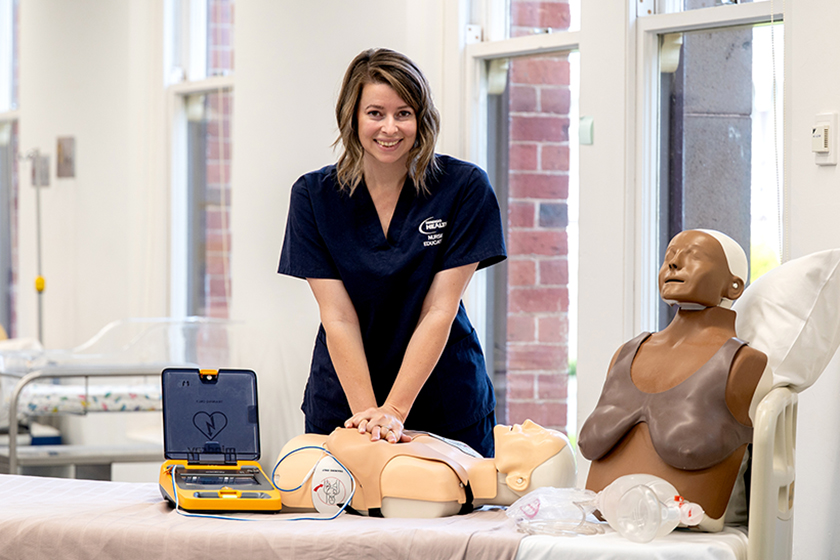
To help close that gap, Bendigo Health has introduced specialised breast overlays for CPR training mannequins, allowing clinicians to practise lifesaving procedures on a realistic female chest.
Bendigo Health Nurse Educator Stephanie Weaving said the equipment addresses a long-standing gap in training, with most CPR mannequins traditionally being flat-chested or androgynous.
The overlays mimic breast tissue, helping staff practise chest compressions, identify landmarks and correctly position defibrillator pads during a cardiac emergency.
"The only thing that's going to bring someone back is to shock them," Stephanie said.
"If we're fumbling around and we don't know how to do pad placement on a woman or feel uncomfortable about that, it's going to cause a delay."
The overlays will be incorporated into graduate nurse Code Blue simulations, with around 120 graduate nurses expected to train with the equipment each year. They will also be used in annual Basic Life Support training, helping staff build confidence in performing CPR, exposing the chest and correctly applying defibrillator pads during a cardiac emergency.
By providing more realistic training opportunities, Bendigo Health is helping ensure women receive the same timely lifesaving care as men during a cardiac arrest.
The initiative was made possible through a collaboration between Bendigo Health and the Bendigo Health Foundation.
It's one example of the practical equipment and training initiatives supported by the Foundation that help Bendigo Health staff build skills, improve care and ultimately save lives.